
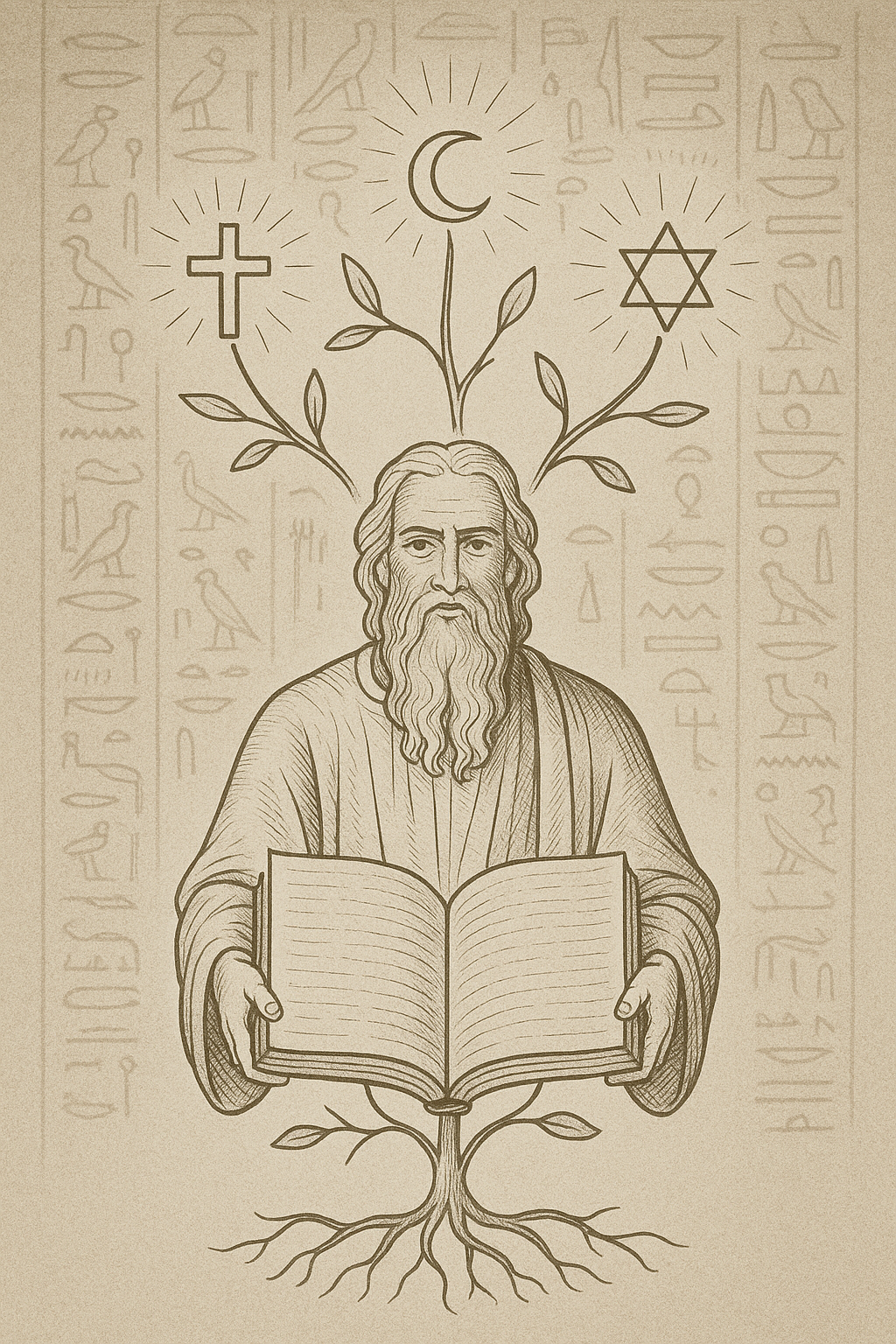
¿Quién REALMENTE escribió la historia de Moisés?
El mensaje de los profetas y de los místicos judíos —desde la Cábala hasta la tradición jasídica— conserva su profundidad y su luz. Sin embargo, al igual que el resto de las religiones que se expandieron bajo la tutela de los imperios, el Judaísmo no se salva de las huellas de la historia política, de las luchas de poder y de las reinterpretaciones interesadas…
Artículos relacionados: Creación de las Religiones Abrahámicas – Creando el Cristianismo – Creando el Islam – Creando el Judaísmo – El Emperador que Re-escribió la Biblia – Del Dogma Religioso al Dogma Científico – El Cristianismo Suprimido de los Primeros Siglos – Similitudes en la Creación de las 3 Religiones Abrahámicas
Nota: Hemos sido adoctrinados para creer que las respuestas espirituales se encuentran únicamente en los llamados libros sagrados, escritos hace siglos en contextos muy distintos al nuestro. Sin embargo, a menudo olvidamos que la divinidad sigue manifestándose en cada época, enviando a los maestros de la libertad y del amor que la humanidad necesita en cada momento. Entre los maestros vivos que más me inspiran y me encantan se encuentran Mooji y Peter Crone( (También Gangagi. Eckhart Tolle, Byron Kartie, Teal Swan y otros)
Historical Rabbit Hole: Who REALLY Wrote the Story of Moses (and Why)?
Madriguera histórica: ¿Quién REALMENTE escribió la historia de Moisés (y por qué)?
📖 Resumen en castellano (aprox. 3000 palabras)
Introducción
El documento examina uno de los temas más explosivos de los estudios bíblicos: la historicidad de Moisés. Plantea la pregunta fundamental: ¿existió realmente Moisés o fue una creación literaria y política? Moisés es considerado por el judaísmo, el cristianismo y el islam como una figura fundacional, cuya influencia ha modelado religiones, sistemas legales y movimientos sociales. Sin embargo, al analizar la evidencia histórica, surge un vacío: no existen registros arqueológicos o egipcios que confirmen su existencia ni los eventos del Éxodo.
Este silencio en las fuentes históricas obliga a replantearse la naturaleza del relato mosaico. Más que biografía, se trataría de mitología política y religiosa, diseñada para consolidar la identidad de un pueblo y su legitimidad frente a la adversidad.
La ausencia de evidencia histórica
Egipto fue una civilización obsesionada con la documentación: registraban victorias, derrotas, nacimientos, transacciones y hasta sueños reales. No obstante, no hay ninguna referencia al Éxodo: ni la liberación de esclavos hebreos, ni plagas, ni el hundimiento del ejército egipcio. Además, las cronologías bíblicas no coinciden con los reinados de los faraones asociados al relato.
Esto conduce a la conclusión de que la narrativa mosaica no se corresponde con hechos históricos verificables, sino con la construcción simbólica de un mito nacional.
La hipótesis documental: múltiples autores
El texto bíblico atribuido a Moisés (el Pentateuco) no fue escrito por una sola mano, ni en la época supuesta de su vida. Se trata de un mosaico literario compilado a lo largo de siglos, con estilos, vocabularios y visiones teológicas distintas.
La hipótesis documental identifica al menos cuatro fuentes principales:
-
Yahvista (J): escrita en Judá (siglo X a. C.), presenta a Dios de manera antropomórfica y cercana. Moisés es un líder humilde y mediador entre lo divino y lo humano.
-
Elohista (E): originada en Israel (siglo IX a. C.), describe a un Dios más trascendente, distante, que se comunica por sueños y visiones.
-
Deuteronomista (D): redactada durante el exilio babilónico (siglo VII-VI a. C.), interpreta la historia como un juicio divino: las desgracias del pueblo se deben al incumplimiento del pacto con Yahvé.
-
Sacerdotal (P): compilada tras el exilio, enfatiza ritos, pureza, genealogías y la centralidad del culto. Redefine a Moisés como legislador ritual y fundador del sistema religioso.
Cada autor responde a necesidades políticas y espirituales de su tiempo. El Moisés resultante es una figura compuesta, cambiante y multifacética.
El propósito del mito de Moisés
El mito mosaico cumple varias funciones clave:
-
Identidad nacional: Israel no es un pueblo más, sino el elegido por Dios, rescatado por milagros y guiado por un pacto especial.
-
Legitimación legal: las leyes no son invención humana, sino mandamientos divinos inmutables.
-
Derecho territorial: la Tierra Prometida no es conquista, sino herencia otorgada por Dios.
-
Explicación del sufrimiento: la desgracia no significa ausencia de Dios, sino castigo por romper el pacto.
En este sentido, Moisés no es un personaje histórico, sino un instrumento político-religioso que unifica a tribus diversas, legitima instituciones y justifica esperanzas.
Moisés como construcción literaria
El relato de Moisés está lleno de recursos narrativos que refuerzan su poder simbólico:
-
La zarza ardiente: un dispositivo para legitimar su autoridad divina.
-
El Mar Rojo: metáfora de liberación, eco de mitos cosmogónicos.
-
La entrega de la Ley: paralelismo con tratados del Cercano Oriente, donde la divinidad sella un pacto con su pueblo.
Cada episodio es diseñado para transmitir mensajes teológicos y políticos, no para registrar hechos.
El papel de los redactores finales
Los textos fueron editados y unificados probablemente durante el exilio en Babilonia o tras el retorno. Los compiladores no eliminaron contradicciones, sino que las conservaron para que distintos grupos pudieran encontrar en el relato versiones que se adaptaran a sus creencias.
Esta técnica editorial creó un relato flexible, inclusivo y atemporal, capaz de sostener la identidad de un pueblo disperso. El resultado fue una tecnología narrativa de supervivencia cultural.
Moisés como arquetipo de autoridad
El Moisés compuesto cumple un papel crucial en la historia de las ideas políticas y religiosas:
-
Es líder carismático (milagros, liberación).
-
Es profeta (intermediario del pacto, intérprete del sufrimiento).
-
Es legislador (fundador del orden social y jurídico).
-
Es sacerdote (creador de ritos y regulaciones).
El relato traza un modelo de liderazgo progresivo: del llamado personal a la institucionalización de la autoridad, mostrando cómo la comunidad transfiere carisma a instituciones.
Textualidad como fuente de poder
La mayor innovación de los redactores fue fundamentar la autoridad no en un linaje ni en instituciones físicas, sino en el texto mismo.
-
Moisés vive eternamente a través de sus palabras.
-
La autoridad se mantiene mediante la interpretación continua del texto.
-
Cada generación debe reinterpretar el legado, actualizándolo a sus propias circunstancias.
Esto permitió que el mito mosaico sobreviviera a la destrucción de templos, la diáspora y los cambios políticos.
Proyección universal de Moisés
El modelo mosaico trascendió el judaísmo:
-
Cristianismo: Jesús como “nuevo Moisés”, que transforma la Ley en gracia.
-
Islam: Mahoma como heredero de la tradición profética, continuador de Moisés.
-
Movimientos seculares: desde los revolucionarios franceses hasta los fundadores de Estados Unidos, muchos se inspiraron en Moisés como arquetipo de legislador.
De esta forma, Moisés se convirtió en plantilla universal de liderazgo y legitimidad.
La adaptabilidad del mito
Cada época reinterpretó a Moisés según sus necesidades:
-
En la opresión: Moisés el liberador.
-
En el caos: Moisés el legislador.
-
En la crisis espiritual: Moisés el profeta.
-
En el exilio: Moisés el fundador del culto portátil.
Esta capacidad de metamorfosis explica la vigencia milenaria del relato.
Moisés y la psicología del liderazgo
El relato construye un líder humano pero divinamente autorizado. Moisés duda, se enoja, se equivoca, pero sigue siendo el elegido. Este realismo psicológico genera confianza: un líder vulnerable es más cercano que uno perfecto.
El modelo combina dos fuentes de legitimidad:
-
Autoridad trascendente (revelaciones, milagros).
-
Autoridad práctica (sabiduría, organización, justicia).
Así se establece un paradigma de liderazgo que sigue influyendo en la política y la religión modernas.
La sucesión de Moisés
El paso de liderazgo a Josué no es accidental: es un manual narrativo de cómo gestionar la transición de poder. La autoridad mosaica se perpetúa, pero el nuevo líder debe reinterpretarla. Esto evita el colapso tras la muerte del fundador y garantiza continuidad institucional.
Moisés como tradición viva
El relato está diseñado para no concluir: Moisés muere sin entrar en la Tierra Prometida, dejando la tarea inconclusa. Esto simboliza que cada generación debe retomar la misión y reinterpretar el pacto.
El carácter abierto e inacabado del relato lo convierte en un recurso inagotable de reflexión y adaptación.
Conclusión
El análisis revela que Moisés no debe entenderse como un individuo histórico, sino como la mayor obra colaborativa de construcción narrativa de la antigüedad. Su figura fue elaborada por múltiples generaciones de autores, editores y comunidades que respondieron a crisis distintas, creando un arquetipo capaz de perdurar.
El verdadero milagro de Moisés no fue separar las aguas del Mar Rojo, sino fundar un modelo de autoridad basado en textos, interpretación y memoria colectiva, que trascendió religiones, culturas y milenios.
En última instancia, lo importante no es si Moisés existió, sino que su relato sigue proporcionando marcos de sentido, justicia y esperanza a comunidades que enfrentan desafíos en todas las épocas.
ENGLISH TRANSCRIPTION OF THE VIDEO
Who really wrote the story of Moses and why? What if everything you think you know about one of history’s most influential figures is wrong? What if the man who supposedly parted the Red Sea, received divine commandments on a mountaintop and led millions out of bondage never actually existed? Today, we’re diving deep into one of the most explosive questions in biblical scholarship.
And I guarantee what you discover will change how you see ancient history forever. The story of Moses is woven into the fabric of Western civilization. Three major world religions claim him as a foundational figure. His laws shaped legal systems across continents. His narrative of liberation has inspired countless movements for freedom and justice.
But here’s the thing that keeps archaeologists and historians up at night. When you actually look for evidence that Moses existed as a real person, you find something deeply unsettling, nothing. Absolutely nothing. Lee, huh? Now, before you click away thinking this is just another attack on religion. Stay with me. This isn’t about destroying faith or tearing down belief systems.
This is about understanding how stories become history, how myths transform into facts, and how the most powerful narratives in human civilization actually came to be. Because the real story of who wrote the Moses narrative and why they did it is far more fascinating than any miracle recorded in ancient texts. Let me start with something that should make every thinking person pause.
Egypt, one of the most meticulously documented civilizations in human history, kept records of everything. They carved victories into stone, recorded defeats on papyrus, documented trade agreements, military campaigns, royal births, natural disasters, and even the dreams of pharaohs. These weren’t casual notetakers.
They were obsessed with preserving their history for eternity. So, here’s the question that haunts every serious historian. How does the most catastrophic event in Egyptian history, the mass escape of hundreds of thousands of slaves, the destruction of their army, the devastation of their firstborn, and the complete humiliation of their divine pharaoh, somehow escape every single Egyptian record? We’re not talking about a minor administrative oversight.
We’re talking about an event that would have been impossible to ignore, impossible to hide, and impossible to forget. The silence isn’t just suspicious, it’s deafening. And it gets worse when you realize that the timeline traditionally assigned to Moses doesn’t even align with what we know about Egyptian history. The pharaohs most commonly associated with the Exodus story left detailed records of their reigns.
None mention Hebrew slaves, mass departures, or miraculous plagues. It’s as if the entire biblical narrative exists in a parallel universe that never intersected with actual Egyptian civilization. But let’s dig deeper into what we do know about how these stories actually came together. The books traditionally attributed to Moses weren’t written by a single author. They weren’t even written during the time Moses supposedly lived.
Modern textual analysis reveals something extraordinary. These texts are composite works stitched together from multiple sources across different time periods. Each with distinct writing styles, vocabularies, and even different names for God.
Scholars call this the documentary hypothesis, and it’s revolutionized our understanding of biblical authorship. What they discovered is that the Torah contains at least four separate source traditions written by different authors with different agendas in different locations during different historical periods. Sometimes these sources contradict each other directly.
Sometimes they tell the same story twice with completely different details and sometimes they reveal the political and theological concerns of their actual authors centuries after Moses was supposed to have lived. Think about what this means. The earliest portions of these texts weren’t written until around the 10th century before the common era. The latest sections came together during or after the Babylonian exile, more than 500 years after the events they described supposedly took place. That’s like someone today writing a detailed firstirhand account of Christopher
Columbus’ voyages based entirely on oral traditions passed down through 20 generations. The Yowis source, probably written in the southern kingdom of Judah, presents God in very human terms, walking in gardens, speaking face to face with people, even changing his mind. The Elohist source, likely from the northern kingdom of Israel, portrays divinity as more distant and formal, communicating through dreams and intermediaries. The Deuteronomist, writing much later, emphasizes covenant, law, and national
identity in ways that clearly reflect the concerns of a people trying to maintain their identity during exile and foreign domination. And then there’s the priestly source, obsessed with ritual purity, genealogies, and temple worship, clearly written by religious authorities trying to establish and maintain institutional power.
Each of these sources had different motivations, different audiences, and different versions of who Moses was supposed to be. But here’s where it gets really interesting. The character of Moses changes depending on which source is telling the story. Sometimes he’s reluctant and humble. Other times commanding and authoritative. In some passages, he speaks directly with God. In others, it’s through an angel. These aren’t minor editorial differences.
These are the fingerprints of multiple human authors creating a composite character to serve their particular needs. The implications of this are staggering. If Moses is a literary construction rather than a historical figure, then we’re not dealing with biography. We’re dealing with mythology.
And once you understand that, everything else starts to make sense. The impossible scale of the miracles, the theatrical sequence of the plagues, the perfect timing of divine interventions, the convenient way Moses always has exactly the right answer for every crisis. These aren’t the messy, complicated details of real history. These are the carefully crafted elements of masterful storytelling.
Consider the famous burning bush encounter. This isn’t just a miraculous event. It’s a brilliant narrative device that establishes Moses’s authority as coming directly from the divine realm. The parting of the Red Sea isn’t just a rescue miracle. It’s a symbolic representation of liberation that echoes creation myths from across the ancient world.
The giving of the law on Mount Si isn’t just divine legislation. It’s a covenant ceremony that mirrors the treaty making practices of ancient neareastern kingdoms. Every element of the Moses story serves a specific literary and theological purpose. And when you step back and look at the broader pattern, what emerges is a carefully constructed national origin myth designed to accomplish several crucial goals for a people struggling to maintain their identity in a hostile world.
First, it establishes divine favor and protection. The Israelites aren’t just another small tribal group competing for survival in the ancient near east. They’re God’s chosen people, personally liberated by divine power, specially selected for a unique covenant relationship. Second, it provides legal and moral authority. The laws aren’t human inventions that can be debated or changed.
their divine commandments delivered by the ultimate prophet, carved in stone by the finger of God himself. Third, it justifies territorial claims. The promised land isn’t just conquered territory. It’s a divine inheritance promised by God to the descendants of Abraham, Isaac, and Jacob, confirmed through the covenant with Moses.
And finally, it explains suffering and displacement. When bad things happen to God’s people, it’s not because God is weak or absent. It’s because the people have broken their covenant obligations, just like their ancestors did in the wilderness. This is sophisticated political and religious propaganda, crafted by brilliant storytellers who understood exactly how narrative shapes identity, how mythology creates meaning, and how sacred stories can unite disperate groups under a common banner.
But recognizing it as mythology doesn’t diminish its power. If anything, it reveals just how masterfully these ancient authors understood human psychology and social dynamics. The question we need to ask isn’t whether these stories are historically accurate. The question is why they were created, who created them, and what purposes they were designed to serve.
Because once you understand the real origins of the Moses narrative, you begin to see how religious authority actually works, how sacred texts are constructed, and how the stories we tell about our past shape the realities we create in our present. The people who wrote these stories weren’t trying to deceive anyone. They were trying to survive.
They were trying to make sense of trauma, displacement, and cultural destruction. They were trying to preserve their identity in the face of overwhelming odds. And they succeeded beyond their wildest dreams, creating a narrative so powerful that it has shaped human civilization for over two millennia. But now we need to dig even deeper into who these authors really were, what historical circumstances drove them to create this composite figure, and how their various agendas shaped every aspect of the Moses story we know today.
The moment you start examining who actually wrote these texts and when, a fascinating picture emerges of ancient political maneuvering that would make modern spin doctors jealous. We’re not dealing with divine revelation here. We’re looking at centuries of careful editing, strategic storytelling, and religious engineering by people with very specific agendas.
Let’s start with the Yowist source, probably our earliest Moses material. This writer was working in the southern kingdom of Judah, likely during the reign of Solomon or shortly after when the unified kingdom was starting to fracture. Think about the political pressures of that moment. You’ve got tribal tensions, competing claims to leadership, and the constant threat of your people fragmenting into irrelevant small groups that neighboring empires could easily absorb.
The Yahwist needed a story that would unite these fractious tribes under a single narrative. So they created Moses as the ultimate unifying figure, someone whose authority transcended tribal boundaries because it came directly from God. Notice how the Yahwists Moses isn’t just a leader. He’s a mediator between the divine and human realms.
This writer understood that lasting political authority needed to be grounded in something bigger than human ambition. But here’s where it gets really clever. The Yowist’s Moses is humble, reluctant, constantly questioning whether he’s worthy of his calling. This isn’t accidental character development. This is political psychology.
A leader who claims divine authority but admits his own inadequacy is much more palatable than someone who demands obedience based on personal power. The Yahwist was creating a leadership model that could justify absolute authority while appearing humble and self- aacing. Now jump forward a few centuries to the northern kingdom of Israel where the Elohist source was taking shape.
These writers were dealing with a completely different set of pressures. The northern kingdom was more cosmopolitan, more exposed to foreign influences, more skeptical of southern claims to religious supremacy. So the Elohists Moses is more distant, more formal, communicating through dreams and intermediaries rather than face-to-face conversations.
This reflects the northern kingdom’s more sophisticated theological understanding, but it also serves a political purpose. If God is transcendent and mysterious, then no earthly ruler can claim to speak for him directly. The Elohist was subtly undermining the kind of absolute authority that the Yowist was trying to establish. Their Moses validates prophetic tradition and divine communication, but in ways that leave room for ongoing revelation and interpretation.
The genius of both these early sources is how they embedded contemporary political concerns into ancient narratives. They weren’t trying to record what actually happened in some distant past. They were using that distant past to address present-day challenges. The wilderness wandering becomes a metaphor for political uncertainty.
The golden calf incident becomes a warning about foreign religious influences. The constant complaints against Moses become a cautionary tale about the dangers of challenging divinelyapp appointed leadership. But the real masterpiece of political storytelling comes with the Deuteronomist writing during one of the most traumatic periods in ancient Israelite history.
We’re talking about the seventh and sixth centuries before the common era when the Assyrian and Babylonian empires were systematically destroying everything these people had built. Jerusalem was under siege. The temple was threatened. The monarchy was collapsing. And thousands of the educated elite were being marched off into exile. Imagine you’re a scribe or priest watching your entire world crumble.
Your people are asking the most devastating question any religious community can face. Where is God in all this? If we’re the chosen people, why are we being crushed by pagans who worship false gods? The traditional answers aren’t working anymore. Something radical needs to be done to preserve not just physical survival, but spiritual and cultural identity.
The Deuteronomist solution was brilliant and ruthless. They rewrote the Moses story to make it a covenant lawsuit. God wasn’t absent or weak. The people had broken their covenant obligations just like their ancestors had in the wilderness. The destruction wasn’t evidence of divine failure. It was divine judgment.
Exactly what Moses had warned would happen if the people turned away from their covenant responsibilities. This is where we get the Moses who delivers not just laws but curses. Blessings for obedience, devastating consequences for disobedience. The Deuteronomist’s Moses becomes a prophet of doom whose warnings are being fulfilled in real time. Every military defeat, every economic collapse, every social crisis becomes proof that Moses knew exactly what he was talking about.
But notice the psychological brilliance of this approach. Instead of abandoning their faith in the face of catastrophe, the people are given a framework for understanding their suffering that actually reinforces their special relationship with God. They’re not being destroyed because they’re insignificant. They’re being punished because they’re so important that God holds them to a higher standard.
The Deuteronomist also introduces something completely new into the Moses narrative. The concept of Moses as a prophet like no other, someone who spoke with God face to face, who knew him as a friend knows a friend. But then the text immediately declares that no prophet like Moses has arisen since and none ever will.
This is literary genius. It establishes Moses as the ultimate religious authority while simultaneously closing off the possibility that anyone else could claim equal status. Think about what this means for religious and political control. If Moses is the greatest prophet who ever lived, then any law or teaching attributed to him carries maximum authority.
But if no one else can claim to be another Moses, then the existing religious establishment becomes the sole legitimate interpreter of what Moses meant. It’s a perfect system for maintaining institutional power while appearing to submit to ancient authority. The final major source, the priestly writer, takes this institutional focus even further.
Writing during or after the Babylonian exile, when the temple was destroyed and the traditional sacrificial system had collapsed, the priestly source reimagines Moses as the founder of an elaborate ritual system that can function anywhere, anytime, under any circumstances. The priestly Moses isn’t primarily a political leader or even a prophet.
He’s a lurggical innovator, someone who receives detailed instructions about tabernacle construction, sacrificial procedures, priestly garments, and ritual purity laws. This Moses provides a blueprint for religious life that doesn’t depend on having a temple in Jerusalem or a functioning monarchy.
It’s portable, adaptable, and completely under priestly control. But here’s the most sophisticated aspect of the priestly contribution. They frame all of this ritual material as revelations received during the wilderness period before the people entered the promised land. This serves multiple purposes simultaneously.
It establishes these practices as ancient and divinely authorized. It explains why they’re necessary even when you don’t have a permanent sanctuary, and it creates a nostalgic longing for a golden age of perfect obedience to divine law. The priestly Moses becomes a figure of impossible perfection. Someone who never made a mistake in implementing God’s instructions, who created a religious system so comprehensive and detailed that every aspect of life is covered. This isn’t historical biography.
This is utopian literature designed to inspire hope for restoration while providing practical guidance for maintaining religious identity in exile. What emerges when you put all these sources together is a composite figure who serves everyone’s needs while belonging completely to no one. The political leader who unites the tribes.
The humble prophet who validates ongoing revelation. The covenant mediator who explains suffering. the ritual founder who preserves religious practice. Moses becomes whatever each community needs him to be precisely because he was created by multiple communities across multiple generations. But there’s one more layer we need to examine. And this might be the most important of all.
These various Moses traditions didn’t just coexist peacefully. They were deliberately woven together by skilled editors who understood exactly what they were doing. The final redactors of these texts weren’t trying to create a historically accurate biography.
They were crafting a foundational narrative that could hold together a fractured people and provide them with the ideological tools they needed to survive as a distinct community. The contradictions weren’t bugs in the system. They were features. Different communities could find their preferred version of Moses embedded in the same sacred text. The tensions between sources created interpretive space that allowed for ongoing theological development.
The composite nature of the character meant that Moses could evolve with changing circumstances while maintaining his essential authority. This is storytelling as statecraft, mythology is nation building, literature as survival strategy, and it works so well that we’re still living with its consequences today.
The beauty of this editorial masterpiece becomes even more apparent when you realize just how seamlessly these different agendas were woven together. The final editors weren’t just cutting and pasting ancient texts. They were creating what we might call today a multimedia narrative experience where different audiences could access different levels of meaning from the same story. Picture a skilled ancient editor sitting with scrolls spread across a table.
Maybe in Babylon during the exile, maybe in Jerusalem after the return. They’re looking at all these different Moses traditions, each serving different communities, each addressing different crises, each offering different solutions. Their job isn’t to pick one version and discard the others. Their job is to create a unified narrative that preserves the essential power of each tradition while building something bigger than any individual source.
So they develop sophisticated literary techniques that allow contradictory stories to coexist within the same text. They use repetition not as redundancy but as emphasis. When you see the same story told twice with different details. You’re not seeing editorial sloppiness. You’re seeing deliberate theological layering. The first version establishes the basic narrative framework. The second version adds interpretive depth.
alternative perspectives or addresses different community concerns. Take the creation accounts in Genesis. The first chapter gives you the cosmic priestly version where God speaks the universe into existence through pure divine command.
The second chapter offers the intimate anthropomorphic version where God forms humans from clay and breathes life into their nostrils. These aren’t competing stories that need to be reconciled. They’re complimentary perspectives that reveal different aspects of the same underlying truth about divine creativity and human significance. The same editorial genius appears throughout the Moses material.
You get the humble shepherd called reluctantly to leadership, but also the powerful prophet who commands respect from pharaohs and performs world-changing miracles. You get the intimate friend of God who speaks face to face, but also the distant lawgiver whose authority comes through mediated revelation.
You get the patient teacher who explains everything carefully, but also the fierce judge who executes divine justice without hesitation. Each version serves different psychological and social needs. When people need inspiration for challenging authority, they can identify with the reluctant shepherd. When they need confidence in their leaders, they can draw on the powerful miracle worker.
When they need comfort in their relationship with the divine, they have the intimate friend. When they need structure and guidance, they have the supreme lawgiver. But here’s where the political sophistication reaches its peak. The final editors didn’t just preserve these different traditions.
They arranged them in a sequence that tells a complete story of how religious and political authority actually develops in the real world. The Moses narrative becomes a masterclass in leadership psychology, showing how someone moves from private calling to public responsibility, from personal revelation to institutional authority, from individual charisma to systematic law.
The burning bush experience establishes the private mystical foundation of authority. The confrontation with Pharaoh demonstrates public validation through miraculous power. The wilderness period shows the messy, complicated process of turning a collection of escaped slaves into a functioning society. The lawgiving episodes provide the institutional framework that can outlast any individual leader.
And the final speeches in Deuteronomy offer the ideological justification for why this system should continue even after the founder is gone. This isn’t accidental narrative development. This is sophisticated political theory embedded in religious storytelling. The editors understood that lasting authority needs multiple sources of legitimacy.
Charismatic leadership gets you started, but institutional systems keep you going. Personal revelation provides the spark, but communal law provides the stability. Individual genius creates the vision, but collective wisdom ensures survival. What makes this even more remarkable is how the editors managed to preserve the essential humanity of their composite character while investing him with ultimate authority.
The Moses who emerges from this editorial process isn’t a distant perfect deity figure. He’s recognizably human with doubts, fears, anger, and limitations. He makes mistakes, loses his temper, questions God’s plans, and sometimes needs divine correction. This psychological realism serves crucial political purposes. A leader who admits uncertainty is more trustworthy than one who claims infallibility.
Authority figure who struggles with his calling is more relatable than one who simply demands obedience. A lawgiver who shows emotion and makes mistakes is more believable than one who appears superhuman. But the editors also understood that effective authority needs to transcend individual personality.
So they embedded the Moses story within larger frameworks of covenant law and institutional structure that can function regardless of who happens to be in charge at any given moment. The system outlasts the founder because it’s designed to be bigger than any individual, even one as significant as Moses.
The genius of this approach becomes clear when you look at how these texts actually functioned in ancient communities. They weren’t just read as historical accounts. They were performed, interpreted, debated, and applied to contemporary situations. Different communities could emphasize different aspects of the Moses tradition depending on their current needs and circumstances.
During periods of political oppression, communities focused on Moses, the liberator, the one who challenged Pharaoh and led people out of bondage. During times of social chaos, they emphasized Moses, the lawgiver, the one who brought order and justice to a wandering people. During religious crisis, they highlighted Moses the prophet, the one who maintained authentic relationship with God despite external pressures.
This adaptability wasn’t a bug in the system. It was the whole point. The editors were creating a foundational narrative flexible enough to address multiple situations while maintaining core themes of divine election, covenant responsibility, and ultimate hope for restoration. They understood that survival required not rigid orthodoxy but creative interpretation that could respond to changing circumstances while preserving essential identity.
The editorial process also reveals something fascinating about how ancient communities understood the relationship between truth and authority. Modern readers often get hung up on questions of historical accuracy, wanting to know whether events actually happened the way they’re described.
But the ancient editors weren’t primarily concerned with chronicling past events. They were concerned with creating authoritative guidance for present and future communities. Truth for these editors wasn’t primarily about factual correspondence to past events. Truth was about the power of narrative to shape identity, guide behavior, and maintain community cohesion across generations.
The question wasn’t whether Moses actually performed specific miracles. The question was whether the Moses story provided the ideological and practical resources communities needed to survive and thrive. This explains why the editors were comfortable preserving contradictory details and impossible chronologies. They weren’t trying to create a historically accurate biography.
They were crafting a sacred narrative that could function as a perpetual resource for community formation and maintenance. The contradictions weren’t problems to be solved. They were interpretive opportunities that allowed different generations to find new meaning in ancient stories.
The political implications of this editorial approach are staggering. By creating a foundational narrative that was simultaneously authoritative and flexible, ancient and contemporary, universal and particular, the editors provided future communities with exactly the tools they would need to maintain their identity through centuries of displacement, persecution, and cultural change.
The Moses they created could speak to Jewish communities in Babylonian exile, early Christian communities in the Roman Empire, Islamic communities in the medieval Spain, and modern liberation movements across the globe. The character was specific enough to feel authentic but universal enough to transcend particular historical circumstances.
This is why the question of whether Moses actually existed as a historical individual is ultimately less important than understanding how the Moses narrative actually functions in human communities. The editors weren’t trying to preserve the memory of a specific person. They were creating an archetypal figure who could embody the deepest hopes and highest aspirations of people seeking meaning, justice, and connection with the divine.
But to fully understand the power of what these ancient editors accomplished, we need to examine how their composite Moses character actually shaped the development of religious and political authority in the centuries that followed. Because the real test of their editorial genius wasn’t whether they created a compelling story.
The test was whether their story could continue to function as communities face challenges the original editors never could have imagined. The answer to that test reveals just how profoundly these ancient storytellers understood the deepest structures of human psychology, social organization, and the eternal human search for meaning in the face of uncertainty and change.
And this brings us to perhaps the most stunning revelation of all. How this carefully constructed Moses figure became the template for religious authority that would dominate human civilization for the next 3,000 years. The editors didn’t just create a character. They created a blueprint for how sacred power could be claimed, maintained, and passed down through generations.
Think about the mechanics of what they accomplished. By the time these various sources were woven together into their final form, probably during the Persian period when Jewish communities were scattered across the ancient world, these editors had solved one of the most difficult problems any religious or political movement faces.
How do you maintain authority across time and distance when your founder is no longer physically present? The traditional answer had always been dynastic succession or institutional hierarchy. Kings passed power to their sons. Priests trained apprentices who inherited their positions. But these systems were fragile. They could be broken by conquest, undermined by incompetent heirs, or corrupted by institutional politics.
The Moses editors needed something more durable, more flexible, more resistant to external pressure. Their solution was revolutionary. Instead of grounding authority in bloodline or institutional position, they embedded it in text itself. Moses becomes immortal not because he lives forever, but because his words live forever. His authority doesn’t depend on having physical descendants or maintaining control over specific institutions.
It depends on communities continuing to read, interpret, and apply his teachings. This was a stroke of genius that transformed how human societies think about leadership and legitimacy. For the first time in history, you had a system where ultimate authority could be simultaneously present and absent, ancient and contemporary, fixed and adaptable.
Moses could be dead for centuries, but his voice could still speak with absolute authority to new situations through the interpretive work of communities that claimed his legacy. The implications rippled out in ways the original editors probably never imagined.
When early Christian communities needed to establish their own authority, they didn’t reject the Moses model. They adapted it. Jesus becomes the new Moses, bringing not just law, but grace. Not just liberation from Egyptian bondage, but salvation from spiritual death. Paul writes letters that function exactly like Deuteronomy, applying foundational teachings to specific community problems while claiming ultimate divine authority.
When Islamic communities form centuries later, they followed the same pattern. Muhammad becomes the final prophet in a line that explicitly includes Moses, receiving revelations that update and complete what Moses began. The Quran functions as a new Torah providing comprehensive guidance for individual and community life while claiming direct divine origin.
Even secular political movements have borrowed this template. Revolutionary leaders from Robespierre to Mao have positioned themselves as lawgivers bringing new social orders based on fundamental principles that transcend individual personalities. The American founders explicitly modeled their constitutional system on biblical precedents, creating founding documents that could function as supreme law after the founders themselves were gone.
But here’s what makes the Moses editors achievement even more remarkable. They understood that textual authority only works if communities actively participate in maintaining it. Unlike dynastic or institutional systems where authority flows downward from rulers to subjects, textual authority requires constant interpretation, application, and renewal by the communities that claim it.
The Moses they created doesn’t just issue commands from Mount Si and disappear. He spends 40 years in the wilderness constantly explaining, clarifying, and adapting his teachings to new situations. The narrative shows him dealing with everything from military strategy to marriage disputes, from religious ritual to economic policy.
By the time you reach Deuteronomy, Moses has become a master teacher whose authority comes not just from his initial divine encounter, but from his demonstrated ability to apply divine principles to the messy complexities of actual human life. This pedagogical dimension of the Moses character serves crucial functions that go far beyond religious instruction.
It establishes interpretation as a sacred activity, something that connects communities to their foundational sources of meaning and authority. It legitimizes ongoing theological and legal development as communities face new challenges. And it creates space for multiple voices and perspectives within the same tradition.
Since interpretation by its very nature involves dialogue between text and context, ancient wisdom and contemporary need, the editors embedded this interpretive imperative directly into their narrative structure. The Moses story doesn’t end with clear resolution.
It ends with the people poised to enter the promised land, but not yet there, with Moses dying within sight of the goal, but unable to complete the journey himself. The message is unmistakable. Every generation has to finish the work Moses began. The story doesn’t conclude because it’s designed to be continued by every community that claims his legacy. This open-ended quality explains why the Moses narrative has been so extraordinarily productive across different cultures and historical periods. Communities don’t just inherit Moses as a static figure from the past.
They actively construct their own versions of Moses as they interpret his teachings for their specific circumstances. The Moses who emerges from medieval Jewish commentary is different from the Moses of early Christian theology which is different from the Moses of Islamic tradition which is different from the Moses of modern liberation theology.
But all of these interpretive traditions share the same basic structure established by the original editors. ultimate authority grounded in foundational text, mediated through ongoing interpretation, applied to contemporary challenges, and maintained through community commitment to the underlying narrative framework. This is why Moses remains such a powerful figure even for people who have serious doubts about his historical existence. The question isn’t whether he actually lived.
The question is whether his story continues to provide resources for communities seeking meaning, justice, and connection with something greater than themselves. The political implications of this textual approach to authority become clearer when you examine how it actually functions in practice. Traditional forms of political power depend on control over physical resources, armies, treasuries, territories, institutions.
But textual authority operates according to completely different principles. It depends on persuasion rather than coercion, interpretation rather than administration, voluntary commitment rather than enforced compliance. This makes textual authority simultaneously more fragile and more durable than traditional political power.
It’s more fragile because it can be undermined by better arguments, alternative interpretations, or simply community disinterest. You can’t force people to find meaning in texts they don’t value or believe in. But it’s more durable because it doesn’t depend on maintaining control over external resources that can be conquered, stolen, or destroyed. The Moses editors understood this paradox intuitively.
They created a figure whose authority is absolute within the narrative framework but completely dependent on communities choosing to participate in that framework. Moses can command perfect obedience from the Israelites in the wilderness. But only if real communities centuries later decide that his story is worth preserving, interpreting, and applying to their own lives. This explains some of the most puzzling features of the Moses narrative.
Why does Moses never actually enter the promised land? Because the story is designed to be perpetually unfinished, requiring each generation to complete the journey. Why do the people constantly rebel against Moses despite experiencing miraculous deliverances? Because the narrative needs to model the ongoing tension between authority and freedom that every community faces.
Why does Moses deliver three different versions of the law in three different books? Because the editors understood that law isn’t just a fixed set of rules, but an ongoing process of applying fundamental principles to changing circumstances.
Why does the story end with Moses blessing the tribes individually rather than issuing final universal commands? Because sustainable authority needs to recognize and accommodate diversity rather than imposing uniformity. Each of these narrative choices reflects sophisticated understanding of how textual authority actually works in human communities. The editors weren’t just preserving ancient traditions.
They were creating a technology for maintaining community identity and purpose across time, distance, and cultural change. They were building a system that could survive the destruction of temples, the collapse of kingdoms, the scattering of peoples, and the rise of entirely new forms of social organization.
The genius of their achievement becomes even more apparent when you consider how few ancient texts have managed to maintain active influence across multiple millennia. Most ancient literature survives only as historical curiosity studied by scholars but irrelevant to contemporary life. But the Moses narrative remains a living tradition, continuously interpreted and applied by communities around the world. This staying power isn’t accidental.
It’s the direct result of editorial choices made by ancient writers who understood that survival required more than just good storytelling. It required creating narrative frameworks flexible enough to accommodate radical changes in human knowledge and social organization while maintaining core themes that speak to universal human needs and aspirations.
The Moses they constructed addresses fundamental questions that every human community faces. How do we distinguish right from wrong? How do we balance individual freedom with collective responsibility? How do we maintain hope in the face of suffering and injustice? How do we pass wisdom from one generation to the next? How do we find meaning and purpose in an uncertain world? These aren’t specifically religious questions, though they’re often addressed through religious frameworks.
They’re human questions, the kind that arise whenever people try to live together in communities that extend beyond immediate family or tribal relationships. The Moses editors created a character who embodies approaches to these questions that have proven remarkably durable and adaptable across different cultural contexts.
But perhaps most importantly, they embedded their answers within narrative structures that invite ongoing participation rather than passive acceptance. The Moses story doesn’t just tell you what to think. It shows you how to think, providing models for moral reasoning, legal interpretation, and community decisionm that can be applied to situations the original editors never could have anticipated.
This participatory dimension explains why Moses remains relevant, even for communities that have moved far beyond the specific historical and cultural circumstances that produce the original texts. The character provides a framework for engaging with fundamental human questions, not a set of predetermined answers that must be accepted without modification.
And this brings us to what might be the most important insight of all. Understanding how the Moses narrative was actually constructed doesn’t diminish its power or relevance. If anything, it reveals just how sophisticated and intentional the ancient editors were in creating resources for human flourishing that could transcend their own particular time and place.
The fact that Moses is a composite character created by multiple authors across multiple generations doesn’t make him less significant. It makes him more significant because it shows how human communities can work together across time to create shared sources of meaning and guidance that serve needs much larger than any individual could address alone.
This collaborative intergenerational dimension of the Moses narrative points towards something profound about how human wisdom actually develops and gets preserved. It’s not usually the product of individual genius, though individual contributions certainly matter. It’s the result of ongoing community reflection, debate, and refinement across many generations, with each contributing their own insights while building on the work of their predecessors.
The Moses editors were participating in exactly this kind of collaborative wisdom building process. They inherited traditions from their ancestors, adapted them to address their own circumstances, and passed them on in forms that could continue to evolve as future communities faced new challenges. They understood that their work wasn’t final or complete, but part of an ongoing conversation that would continue long after they were gone.
This understanding challenges some of our most basic assumptions about how authority, tradition, and innovation actually relate to each other. We often think of these as opposing forces with tradition representing the past and innovation representing the future.
But the Moses narrative shows how creative innovation can actually serve the preservation and transmission of tradition. While deep respect for tradition can inspire radical innovation in how ancient wisdom gets applied to contemporary challenges, the editors weren’t betraying their inherited traditions by adapting and combining them in new ways. They were fulfilling those traditions by ensuring they could continue to serve human needs even as circumstances changed dramatically.
They weren’t undermining Moses’s authority by constructing him from multiple sources. They were establishing a form of authority that could remain vital and relevant across centuries of social, political, and intellectual transformation.
This dynamic relationship between tradition and innovation, preservation and adaptation, ancient wisdom and contemporary application may be the most important legacy of the Moses editor’s work. They created a model for how human communities can maintain connection with their deepest sources of meaning and purpose while remaining flexible enough to thrive in changing circumstances. And that model continues to influence how we think about everything from constitutional law to religious interpretation, from educational philosophy to therapeutic practice.
Whenever we try to apply foundational principles to new situations, whenever we balance respect for inherited wisdom with recognition that circumstances change, whenever we seek authority that transcends individual personality while remaining responsive to human needs, we’re working within frameworks that the Moses editors helped establish.
Aim, the real question isn’t whether Moses existed as a historical individual. The question is whether the editorial achievement that created the Moses we know can continue to serve human communities as they face challenges that would have been unimaginable to the original ancient writers. And the answer to that question depends not on archaeological evidence or textual criticism, but on whether contemporary communities find resources in these ancient narratives that help them address their own deepest questions
about meaning, purpose, justice, and hope. The story becomes even more fascinating when you examine how the Moses editors dealt with one of the most challenging aspects of their project. Creating a figure who could serve as the ultimate religious authority while simultaneously validating the ongoing need for religious interpretation and leadership. This wasn’t just a theological problem.
This was a practical challenge that would determine whether their literary creation could actually function in real communities facing real problems. Think about the delicate balance they had to strike. If they made Moses too perfect, too divine, too removed from ordinary human experience, he would become irrelevant to people struggling with everyday moral and spiritual challenges.
But if they made him too human, too fallible, too obviously limited, he couldn’t carry the weight of ultimate authority that their communities needed to maintain cohesion and direction. Their solution reveals a level of psychological sophistication that rivals anything produced by modern leadership theorists.
They created a Moses who embodies what we might call graduated authority. someone whose legitimacy operates on multiple levels simultaneously. At the foundational level, Moses speaks directly with God, receives divine revelation, and performs miracles that demonstrate supernatural backing. This establishes his credentials as someone who can access truths and powers beyond ordinary human reach.
But then the editors layer on top of this supernatural authority a completely different kind of legitimacy based on demonstrated wisdom, practical effectiveness, and genuine care for his people. The Moses who emerges from the wilderness narratives isn’t just someone who can work miracles. He’s someone who knows how to settle disputes fairly, organize complex logistics, maintain morale during difficult periods, and adapt general principles to specific situations. This combination of transcendent and practical authority
serves crucial functions that go far beyond establishing Moses’s personal credibility. It creates a template for religious leadership that can function even when supernatural interventions aren’t available. Communities can look for leaders who combine spiritual insight with practical wisdom, who can connect ultimate concerns with immediate needs, who can translate abstract principles into concrete guidance.
The editors embedded this leadership model so deeply into their narrative structure that it continues to shape expectations about religious authority even today. When communities evaluate potential leaders, they’re often looking for exactly this combination of spiritual authenticity and practical competence that the Moses editors pioneered.
The person who can pray effectively but can’t organize a meeting feels incomplete. The administrator who can manage complex organizations but lacks spiritual depth feels inadequate. But the editors went even further than just creating a leadership model. They embedded within the Moses narrative a sophisticated theory about how authority actually transfers from one generation to the next.
The succession narratives in Numbers and Deuteronomy aren’t just historical accounts of how leadership passed from Moses to Joshua. They’re instruction manuals for how communities can maintain continuity of purpose and direction even when foundational leaders are no longer available. Notice how carefully the editors handle this transition. Moses doesn’t just die and leave Joshua to figure things out on his own.
There’s an extended period of preparation where Moses gradually transfers specific responsibilities while maintaining overall authority. Joshua receives divine confirmation of his calling, but through Moses’s mediation. The people accept Joshua’s leadership, but because Moses has publicly endorsed him and provided clear instructions about how the transition should work.
This isn’t accidental narrative development. This is institutional design embedded in storytelling. The editors understood that one of the greatest threats to community survival is leadership succession crisis where the death or departure of a foundational figure triggers fragmentation, conflict or collapse.
By showing how Moses successfully transferred authority to Joshua while preserving the essential characteristics that made his leadership effective, they provided a template that future communities could adapt to their own succession challenges. A the psychological dimensions of this succession narrative are particularly sophisticated. Moses doesn’t become irrelevant when Joshua takes over.
Instead, he becomes a different kind of authority figure, someone whose influence continues through the principles he established, the precedents he set, and the interpretive frameworks he provided. Joshua’s authority is legitimate precisely because it connects to Moses, but it’s also distinctly his own because he faces new challenges that require fresh applications of inherited wisdom.
This creates what we might call layered authority where multiple sources of legitimacy can coexist without competing destructively. Moses remains the ultimate lawgiver whose teachings provide fundamental guidance. But Joshua becomes the practical leader whose decisions address contemporary challenges.
Future leaders can claim connection to both precedents while establishing their own distinctive contributions to the ongoing tradition. The editors extended this layered authority concept throughout their entire narrative framework. The patriarchs provide one layer of legitimacy based on divine promises and family lineage. Moses adds another layer based on lawgiving and national formation. The wilderness generation contributes warnings about the consequences of disobedience.
The conquest generation offers models for how inherited promises can be fulfilled through human action and divine blessing. Each layer serves different functions and speaks to different aspects of community identity and purpose.
When people need assurance about their ultimate destiny, they can appeal to the patriarchal promises. When they need guidance for immediate decisions, they can consult the Mosaic law. When they need motivation to persevere through difficulties, they can remember the wilderness lessons. When they need confidence for challenging undertakings, they can draw on conquest narratives. This multi-layered approach explains why the Moses traditions have been so remarkably adaptable across different historical periods and cultural contexts.
Communities facing persecution can emphasize the Exodus themes of liberation and divine protection. Communities establishing new settlements can focus on conquest narratives about claiming promised inheritance. Communities dealing with internal conflict can draw on wilderness stories about the importance of unity and obedience to legitimate authority.
The genius lies not just in the variety of available themes, but in how they’re integrated into a coherent narrative arc that validates the full range of human experience. The Moses story acknowledges that life includes periods of bondage and periods of freedom, times of wandering and times of settlement, moments of divine intervention and long stretches of ordinary struggle. Communities can find their current circumstances reflected somewhere in this comprehensive narrative framework.
But perhaps the most brilliant aspect of the editor’s work is how they embedded self-correcting mechanisms into their authority structures. The Moses they created is powerful enough to command absolute obedience when necessary, but humble enough to admit mistakes and accept correction. He’s confident enough to challenge pharaohs and lead nations, but flexible enough to modify his approach when circumstances change. These characteristics aren’t just personality traits.
They’re built-in safeguards against the kind of authoritarian abuse that religious and political systems so often enable. The Moses who argues with God, who asks for help when overwhelmed, who shares leadership responsibilities with others, provides a model of authority that includes accountability, transparency, and genuine concern for the welfare of those being led.
The editors understood that sustainable authority requires ongoing consent from those being governed. People will only follow leaders long-term if they believe those leaders are genuinely committed to their well-being rather than just personal power or institutional control. By showing Moses constantly advocating for his people, even when they’re rebellious or ungrateful, the editors established a standard for legitimate leadership that transcends mere command and control.
This consensual dimension of authority creates interesting tensions that the editors exploited for dramatic and instructional purposes. The people complain about Moses’s decisions, question his judgment, and sometimes openly rebel against his leadership. But the narrative consistently validates Moses’s authority while also acknowledging the legitimacy of people’s concerns and needs. This isn’t just good storytelling.
This is sophisticated political theory that recognizes the complex dynamics between leaders and followers in real communities. Effective authority requires both confidence and humility, both decisiveness and flexibility, both vision and responsiveness to immediate concerns. The Moses narrative shows how these apparently contradictory qualities can be integrated into leadership that serves both individual and collective flourishing.
The editors also understood that authority becomes more legitimate when it’s exercised reluctantly rather than eagerly sought. The Moses who tries to avoid his calling, who argues with God about his qualifications, who repeatedly asks to be relieved of his responsibilities is much more trustworthy than someone who actively campaigns for power or claims to enjoy making difficult decisions.
This reluctant leader motif serves multiple psychological and political functions simultaneously. It suggests that legitimate authority comes from external calling rather than personal ambition. It implies that good leaders are those who understand the burdens of leadership rather than just its privileges. And it creates space for followers to maintain their dignity even when accepting direction from others. The reluctant leader doesn’t diminish followers by demanding submission.
Instead, he elevates them by suggesting that leadership is a form of service that anyone might be called to provide under the right circumstances. This democratizing tendency within hierarchical authority structures may be one of the most important contributions the Moses editors made to human political development.
By creating a figure whose authority is simultaneously absolute and humble, transcendent and practical, individual and institutional, the editors provided resources for thinking about power that continue to influence contemporary debates about everything from corporate governance to political leadership to family dynamics.
Whenever we ask questions about what makes authority legitimate, how leaders should relate to followers, or what obligations come with power, we’re working with concepts that the Moses editors helped establish. The enduring relevance of these concepts suggests that the editors identified something fundamental about human social organization that transcends specific historical circumstances.
Communities need leadership that can provide direction and maintain cohesion, but they also need protection against authoritarian abuse and space for individual dignity and initiative. The Moses narrative offers a framework for thinking about these tensions that doesn’t resolve them through simple formulas, but provides resources for ongoing negotiation and adaptation. Different communities can emphasize different aspects of the Moses model depending on their particular challenges and circumstances, but the underlying structure remains remarkably stable and productive. This adaptability explains why Moses continues to function as a relevant figure even for people who have
serious questions about the historical accuracy of the biblical narratives. The value doesn’t lie primarily in what actually happened in some distant past. but in the resources these stories provide for addressing perennial human challenges that every generation faces in new forms.
The question isn’t whether Moses really existed as described in ancient texts. The question is whether the Moses constructed by ancient editors continues to offer insights about leadership, authority, community formation, and moral reasoning that can help contemporary people navigate their own complex social and spiritual realities.
And that question can only be answered by communities willing to engage seriously with these ancient narratives, not as fixed dogmas that must be accepted without question, but as inherited wisdom that can be tested, interpreted, and applied to contemporary circumstances.
The Moses editors created resources for ongoing conversation between past and present, not final answers that end all discussion. This conversational quality may be the most important legacy of their editorial achievement. They understood that wisdom isn’t something you possess, but something you participate in. Not a finished product, but an ongoing process of reflection, discussion, and practical application.
The Moses they created invites that kind of ongoing engagement rather than demanding passive acceptance. The result is a figure who remains alive in human consciousness not because he provides easy answers to difficult questions but because he provides frameworks for engaging with those questions in ways that take both ancient wisdom and contemporary circumstances seriously. Whether Moses existed as a historical individual becomes less important than whether the Moses narrative continues to generate insights about what it means to live ethically and meaningfully in community with others. And the evidence
suggests that it does across remarkably diverse cultural contexts and historical periods. The staying power of the Moses traditions points towards something profound about how human communities create and maintain shared sources of meaning that can survive radical changes in knowledge, technology, and social organization. The editors didn’t just preserve ancient stories.
They created a technology for cultural transmission that has proven remarkably durable and adaptable. They showed how communities can maintain connection with their deepest sources of identity and purpose while remaining flexible enough to address new challenges and opportunities. That achievement continues to influence how we think about everything from constitutional interpretation to educational philosophy, from therapeutic practice to organizational leadership.
Whenever we try to balance respect for inherited wisdom with recognition that circumstances change, we’re working within frameworks that the Moses editors helped establish. The real test of their work isn’t whether it satisfies modern standards of historical accuracy, but whether it continues to provide resources for human flourishing in circumstances they never could have imagined.
And that test can only be conducted by communities willing to engage seriously with the challenges and opportunities of applying ancient insights to contemporary realities. The conversation between past and present that the Moses editors initiated continues today in synagogues and churches, in university classrooms and community centers, in personal reflection and public debate.
Whether that conversation remains productive depends on our willingness to approach these ancient narratives with both respect and critical thinking, both openness and discernment. The Moses editors showed us how inherited wisdom can be preserved through creative adaptation rather than rigid repetition. Their example suggests that the best way to honor ancient insights is not to freeze them in unchanging forms, but to keep them alive through ongoing interpretation and application that takes both their original contexts and our contemporary circumstances seriously. That ongoing interpretive work is itself
a form of authority that the Moses editors validated and encouraged. They created space for future communities to participate in the same kind of creative synthesis that they practiced, combining inherited traditions with contemporary insights to address the challenges of their own time and place.
Whether we take advantage of that invitation depends on our willingness to engage with these ancient narratives as living traditions rather than historical artifacts, as resources for ongoing reflection rather than final answers to all questions. The Moses editors provided the foundation. What we build on that foundation remains to be seen.
The collaborative nature of this editorial achievement reveals something even more profound about how human knowledge actually develops and gets transmitted across generations. We’re not looking at a single moment of divine inspiration or individual genius. We’re witnessing a centuriesl long conversation between communities of people wrestling with the most fundamental questions of human existence.
Each generation building on the insights of their predecessors while adapting to their own unique circumstances. This process of collective wisdom building challenges many of our modern assumptions about how authoritative texts come into being. We tend to think in terms of individual authorship, single moments of creation, fixed meanings that don’t change over time.
But the Moses traditions show us something completely different. Meaning emerging through dialogue, authority developing through consensus, truth crystallizing through the patient work of multiple minds across multiple generations. The editors weren’t just preserving old stories or creating new ones. They were participating in what we might call a wisdom ecology where different insights, perspectives, and experiences could interact, compete, and synthesize into something richer and more comprehensive than any individual contribution. Each source tradition brought its own
gifts to this collaborative process, and the final synthesis preserved the essential value of each while creating something genuinely new. This ecological approach to wisdom building has profound implications for how we understand religious and cultural authority more broadly.
It suggests that the most enduring and valuable insights emerge not from isolated individual revelation but from sustained community reflection on shared experiences of meaning, challenge and transcendence. The authority of the resulting texts comes not from their claim to perfect accuracy about past events, but from their demonstrated capacity to provide resources for ongoing human flourishing.
When you examine how the Moses traditions have actually functioned in real communities over the past three millennia, this collaborative wisdom model explains their remarkable staying power. Different communities have found different aspects of the Moses narrative relevant to their circumstances, but the underlying framework has remained flexible enough to accommodate radical changes in human knowledge, social organization, and cultural values.
Medieval Jewish commentators found sophisticated legal and philosophical principles embedded in stories that earlier generations had understood primarily as historical narratives. Early Christian theologians discovered christoologgical themes that connected Moses to Jesus in ways that transformed both figures. Islamic scholars integrated Moses into a comprehensive prophetic tradition that included Abraham, Jesus, and Muhammad as successive revelations of the same fundamental divine guidance.
Modern liberation theologians have found in Moses a model for challenging oppressive systems and working for social justice. Contemporary psychologists have discovered in the wilderness narratives profound insights about human development, trauma recovery, and the formation of healthy communities.
Environmental activists have drawn on Sabbath and Jubilee traditions to develop frameworks for sustainable relationships with the natural world. Each of these interpretive traditions has found genuine resources in the Moses narratives for addressing their specific concerns and challenges. This isn’t a matter of reading arbitrary meanings into ancient texts.
It’s a recognition that the editors created narrative frameworks rich enough and flexible enough to support multiple levels of interpretation while maintaining coherent thematic unity. The genius lies in how the editors embedded universal human concerns within specific historical narratives in ways that allow those concerns to be recognized and addressed across radically different cultural contexts.
Questions about justice, leadership, community formation, moral reasoning, and the relationship between individual freedom and collective responsibility appear in every human society. But they take different forms depending on particular circumstances. The Moses traditions provide a vocabulary and conceptual framework for engaging with these universal concerns that can be adapted to specific situations without losing its essential character.
Communities facing oppression can find liberation themes. Communities struggling with internal conflict can discover reconciliation models. Communities seeking direction can identify leadership principles. Communities dealing with moral confusion can locate ethical guidance. But perhaps most importantly, the Moses traditions validate the ongoing interpretive work that every generation must do to apply inherited wisdom to contemporary challenges.
The editors didn’t just create a fixed set of answers to predetermined questions. They created a methodology for engaging with fundamental human concerns that assumes circumstances will change and new applications will be necessary. This interpretive imperative is built directly into the narrative structure of the Moses traditions. The stories don’t end with clear resolution.
They end with transition with new challenges emerging with the next generation having to figure out how to apply Moses’s teachings to situations he never directly addressed. The message is unmistakable. The work isn’t finished and it’s never supposed to be finished.
Every community that claims the Moses legacy is implicitly accepting responsibility for continuing the interpretive conversation that the original editors initiated. They’re agreeing to wrestle with the tensions between ancient wisdom and contemporary circumstances, between inherited principles and emerging challenges, between individual insight and collective discernment.
This ongoing interpretive responsibility explains why the Moses traditions have remained so vital and productive across different historical periods. They don’t provide final answers that end all discussion. They provide frameworks for ongoing discussion that can generate new insights as circumstances change. The authority lies not in static content, but in dynamic process.
When communities approach the Moses traditions as living resources for ongoing reflection rather than fixed dogmas requiring unquestioning acceptance, they discover depths of meaning that weren’t apparent to previous generations. New questions generate new insights. Change circumstances reveal previously hidden dimensions of ancient stories.
Contemporary challenges illuminate aspects of inherited wisdom that weren’t obvious to earlier interpreters. This generative quality of the Moses traditions reflects the sophisticated understanding of human learning and development that the editors embedded in their work.
They recognized that wisdom isn’t something you receive once and possess forever. It’s something you participate in continuously, something that grows and deepens through ongoing engagement with life’s challenges and opportunities. So, here we are at the end of our journey into one of history’s most carefully constructed mysteries. The Moses you thought you knew, the lawgiver, the liberator, the prophet who spoke with God face to face, emerges not as a single historical figure, but as humanity’s greatest collaborative storytelling achievement.
Multiple authors across centuries, each responding to their own crisis, their own needs for meaning and identity, wo together a character so compelling that he shaped civilization for three millennia. The question isn’t whether Moses existed, but whether we’re brave enough to appreciate the profound human wisdom embedded in his creation.